Fraud Blocker
The Season of Smiles
20% OFF
On all treatments
Book Now
The Season of Smiles
20% OFF
On all treatments
Book Now

How Long Do Dental Implants Really Last?: A Hanwell Guide

GDC-Registered Dentist – CQC Registered Practice – Hanwell Smiles
How long do dental implants last
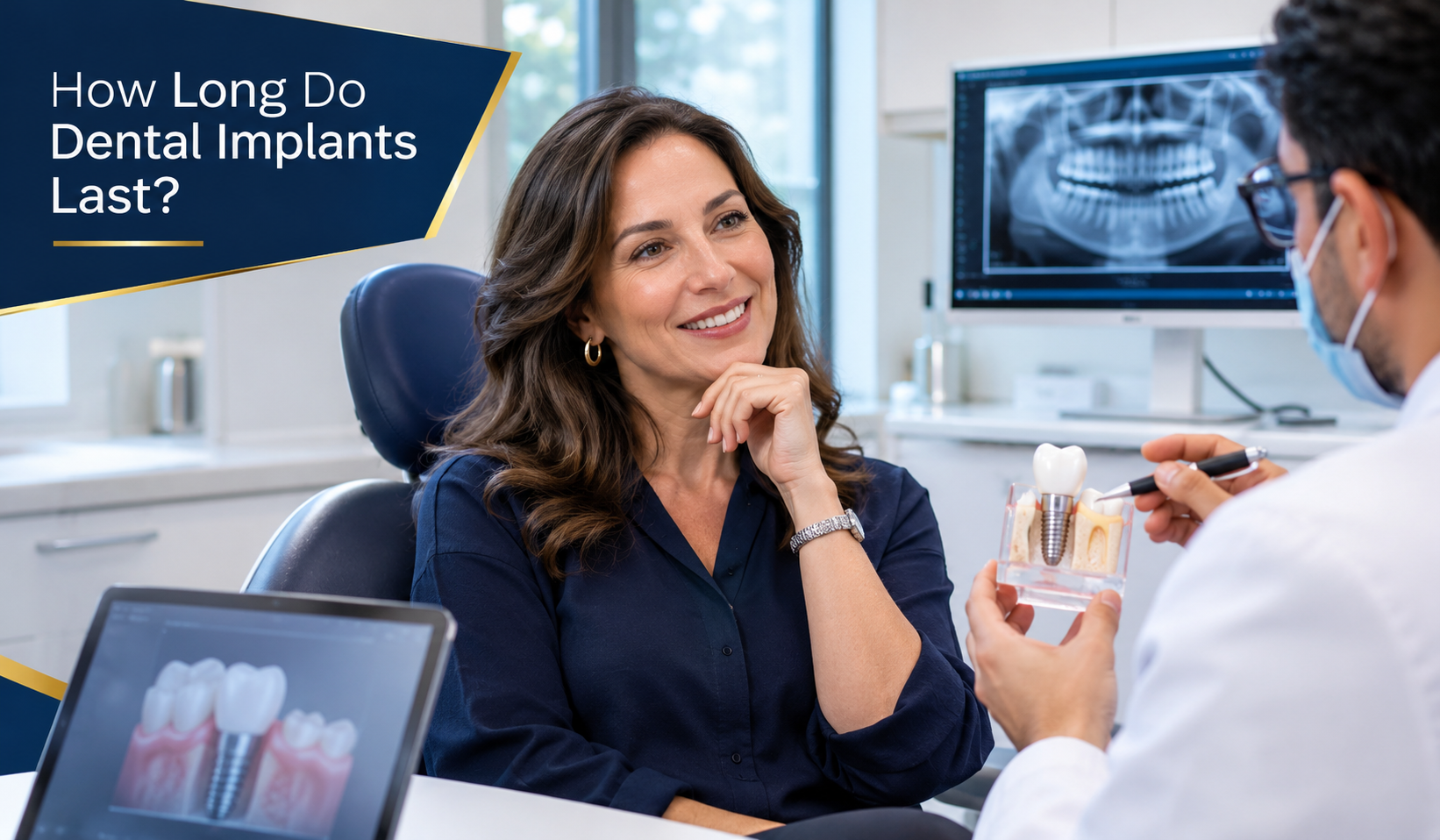
If you’re asking how long do dental implants last, the honest answer is that it varies from patient to patient. Implants are designed as a long-term solution for a missing tooth, and with consistent care many patients see good results for years. At Hanwell Smiles, our clinical team assesses each case individually, because outcomes depend on oral hygiene, bone health and lifestyle rather than one fixed number. This guide covers what affects implant longevity, how the implant differs from the crown on top, and what ongoing care involves, before you book a consultation in Hanwell, serving Ealing and West London.

Quick Answer: Dental implants can last for many years, often decades. Their longevity depends on gum and bone health, smoking, oral hygiene and regular dental reviews. The crown may need replacement sooner.

How Long Do Dental Implants Usually Last?

Dental implants are intended as a long-term replacement for a missing tooth, and many patients use the same implant for well over a decade. There is no single fixed lifespan that applies to every case.
How long an implant lasts depends on bone structure, gum health, bite and how consistently a patient attends review appointments. Some patients may need a repair sooner than others, and that does not mean the treatment has failed. At Hanwell Smiles, we discuss realistic expectations at the initial assessment rather than promising a set number of years.

What Affects the Lifespan of Dental Implants?

Several factors influence how long an implant and its restoration perform well:

  • Oral hygiene – Plaque build-up can lead to gum inflammation and bone loss over time.
  • Bone density – The strength of the jawbone supporting the implant affects stability.
  • Smoking – Associated with a higher risk of complications and slower healing.
  • Bite and grinding – Excessive grinding (bruxism) places added strain on the implant and crown.
These factors interact differently in every patient, which is why our team assesses individual circumstances rather than a general estimate.

How Can You Make Dental Implants Last Longer?

  • Brush twice daily and clean between the implant and neighbouring teeth. 
  • Use interdental brushes or implant-specific floss to reduce plaque build-up. 
  • Attend regular reviews so early signs of gum inflammation can be addressed promptly. 
  • Avoid smoking, as it can affect healing and long-term stability. 
  • Mention any grinding or clenching to your dentist, who may suggest a protective nightguard.
None of these steps guarantee a specific outcome, but together they give an implant the best chance of performing well.

Do Dental Implants Need to Be Replaced?

The implant itself and the crown sitting on top are separate components, and they don’t always need replacing together. The titanium implant integrates with the jawbone and can remain in place for a long period. The crown is more exposed to everyday biting and chewing, so it may need review, repair or replacement sooner.
Replacement is never automatic — it depends on how the individual implant and restoration are performing at each check-up, which is why regular monitoring matters more than any fixed timeline.

What Happens to the Implant Crown Over Time?

The crown attached to an implant is the part patients see and use daily, so it experiences the most wear. Over the years, a crown may show surface wear, minor chipping or a change in fit as the surrounding gum settles. This doesn’t necessarily mean the implant underneath has a problem. 

Your dentist will usually assess the crown separately from the implant at each review, and any adjustment is treated as routine maintenance rather than a sign that treatment has failed.

How Do You Care for Dental Implants?

Caring for an implant is similar to caring for natural teeth, with a few additions:

  • Clean around the implant thoroughly, including the gumline, at least twice a day.
  • Use low-abrasive toothpaste to avoid scratching the crown’s surface.
  • Attend scheduled hygiene appointments for professional plaque and tartar removal.
  • Tell your dental team promptly if you notice swelling, discomfort or looseness.
Consistent, unhurried care is one of the most practical ways patients can support an implant’s long-term performance.

How Much Do Dental Implants Cost in Hanwell?

At Hanwell Smiles, a single dental implant with a custom crown is priced from £2,450, with bone grafting treated separately where clinically required. 

A consultation is available for £50, redeemable against treatment if you go ahead. The final cost depends on your individual assessment, including whether additional procedures are needed. We confirm your personalised treatment plan and full cost breakdown before any work begins.

Dental Implants in Hanwell for Patients From Ealing and West London

Hanwell Smiles is based on Uxbridge Road in Hanwell, making the practice a convenient option for patients travelling from Ealing, Greenford, Southall and the wider West London area.

Many implant patients choose us for straightforward access to a local, CQC-registered clinic for routine reviews and aftercare, rather than travelling into central London. Whether you’re exploring dental implants in Hanwell for the first time or comparing options locally, our team can talk through what treatment and long-term maintenance would involve for your situation.

Conclusion

How long a dental implant lasts comes down to individual oral health, lifestyle and ongoing care, not one guaranteed figure. With consistent hygiene and regular reviews, implants are designed to be a durable, long-term option for replacing a missing tooth. Book a dental implant consultation with Hanwell Smiles in Hanwell today.

Frequently Asked Questions

At Hanwell Smiles, a single implant with crown starts from £2,450, and a bone graft, where clinically required, starts from £550. You receive a written quote after your consultation.
Full arch pricing varies with the number of implants, the replacement teeth and any preparatory work, so there is no standard fee. After assessment, you receive a written treatment plan and price.
They can suit patients who have lost most of their teeth and want fixed rather than removable teeth, but value is personal. Your dentist will compare them with alternatives such as dentures based on your health and budget.
A full arch bridge typically replaces a complete row of around 10 to 14 teeth, supported by four to six implants, although your own plan is individual.
Your dentist reviews your dental and medical history, takes X-rays, assesses your gums and bone, and discusses single or full arch options. You leave with a treatment plan and price.

Book a Dental Implant Consultation in Hanwell

The next step is a consultation with our team in Hanwell, where we look at your situation directly rather than relying on generic timelines. Book your dental implant consultation at Hanwell Smiles. Call 020 7096 3325, email: info@hanwellsmiles.co.uk, or book online today.

Book Your Dental Implants Appointment

Hanwell Smiles — Dental implants vs full arch implants

Connect With Us